Saturday, December 31, 2022

Bianca Belair named ESPN 2022 Female Wrestler of the Year

WWE superstar Bianca Belair was named Female Wrestler of the Year by. ESPN.

According to ESPN, “Belair was arguably the best performer in the world in 2022, and the competition was steep.”

Belair is most known for her athleticism, decorative outfits and signature long-braided ponytail in WWE and for winning titles in WWE Women’s Royal Rumble, WWE Elimination Chamber, WWE Smackdown Women’s Championship and WWE Bumpy Awards for Best Match of the Half-Year.

Belair posted to Twitter to show her appreciation to those who supported her and competed against her:

Thursday, December 29, 2022

The American Museum of Natural History in New York Names Sean Decatur as its First Black President

Scott L. Bok, Chair of the Board of Trustees of the American Museum of Natural History, announced today that scientist and educator Sean M. Decatur has been named the next President of the Museum, assuming his duties on April 3, 2023. A biophysical chemist with a doctorate from Stanford University, Decatur has served with distinction since 2013 as President of Kenyon College. At the Museum, he will succeed Ellen V. Futter, who will step down in March 2023 after a 30-year tenure.

Scott L. Bok said, “The Board has enthusiastically confirmed the appointment of Sean M. Decatur to lead the American Museum of Natural History into its next era, ushered in by the opening of the Museum’s Richard Gilder Center for Science, Education, and Innovation in February 2023. With a proven record as an exceptionally inspiring and effective leader, he brings to the Museum the expertise in scientific research, passion for teaching and learning, and deep commitment to outreach and diversity that are central to the Museum’s mission. His thoughtful leadership will benefit the Museum, the City of New York, and the entire museum community.”

Sean M. Decatur said, “I feel as if everything I’ve done in life has led up to the tremendous privilege, responsibility, and opportunity of heading the American Museum of Natural History. This great institution, which already has achieved so much during Ellen Futter’s presidency, is ready to take on the next crucial challenges in everything from scientific research to supporting public education, and to expanding access. I look forward eagerly to working with the Board, the outstanding staff, and the people of New York in realizing the unparalleled promise of this Museum.”

About Sean M. Decatur

Born in Cleveland, Ohio, Sean Decatur earned his bachelor’s degree from Swarthmore College and in 1995 was awarded his doctorate in biophysical chemistry from Stanford University. From 1995 to 2008, he was an assistant and associate professor of chemistry at Mount Holyoke College, where he helped establish a top research program in biophysical chemistry. He was a visiting scientist at the Massachusetts Institute of Technology from 2004 to 2005 and then served from 2008 to 2013 as a professor of chemistry and biochemistry and dean of the College of Arts and Sciences at Oberlin College. He has won research grants from the National Science Foundation and National Institutes of Health and from private foundations including the Alzheimer’s Association and the Dreyfus Foundation and is the author of numerous scholarly articles. He was named a Fellow of the American Association for the Advancement of Science in 2017 and was elected to the American Academy of Arts and Sciences in 2019.

After being named President of Kenyon College in 2013, Sean Decatur became a leading voice in the national conversation about higher education. Under his leadership, Kenyon joined the American Talent Initiative, a coalition of colleges working to expand access and opportunity, and inaugurated the Kenyon Access Initiative to increase diversity and foster inclusion, as a result of which Kenyon has attracted the most diverse and academically talented incoming classes in its history. While serving as President, Decatur also continued to teach courses, including seminars in biochemistry, and developed Kenyon’s natural sciences division, enabling the college to provide students with experiences rivaling those at major research universities.

Sean Decatur, who will be the Museum’s first African American President, is married to Renee Romano, the Robert S. Danforth Professor of History and Professor of Comparative American Studies and Africana Studies at Oberlin College. They have two adult children, Sabine and Owen.

Descendants of the Historic Rosewood Massacre Set to Commemorate 100th Anniversary

The Descendants of Rosewood Foundation, Inc. announced the Remembering Rosewood Centennialcommemoration. This centennial anniversary will honor the legacy of bravery, determination, and perseverance of the eight families impacted by the Rosewood Massacre of 1923. The week-long commemoration will take place at the University of Florida in Gainesville from January 8 - 14, 2023, and will honor the lives of those lost 100 years ago and explore what the next 100 years look like for Black America. The University of Florida is the host sponsor of the centennial commemoration, the title sponsor is Holland & Knight Law Firm, and the presenting sponsor is the Southern Poverty Law Center.

The goal of this carefully curated week of events is twofold, first, to gather in community for a larger conversation around race in America, human rights and civil rights, land ownership, and wealth accumulation, and second, to forecast what the next 100 years look like for the next generation. Events include the Rosewood Traveling Museum opening at the University of Florida, Wreath Laying Ceremony, The Legacy Forum, Next Gen seminars, movie screenings, and special guest appearances from some of the country's leading scholars, activists, and cultural workers.


A century ago in Levy County, Florida, the town of Rosewood experienced one of the most horrific events in American history. In January 1923, a racially motivated attack decimated the predominantly African-American town and devastated its residents. This massacre has been discussed and dissected for years. Despite being terrorized by those events, survivors and descendants of Rosewood got justice, becoming the first African Americans to receive reparations from a legislative body in America.

"The future starts with honoring the lives that were taken, acknowledging the trauma that was left behind, sharing the stories of the past, and celebrating the promise of all that lies ahead," said Gregory Doctor, the cousin of Arnett Doctor, the descendant who led the fight for the families' historic reparations settlement. "We look at this event as a launch pad for progress and are honored to lead the charge in shaping what the next 100 years looks like for our country."

There are eight families whose direct descendants remain to tell the stories of resilience and fortitude that defined the town of Rosewood: the Bradleys, the Carriers, the Colemans, the Edwards, the Evans, the Goins, the Halls, and the Robinsons families. But a simple request two years ago sparked this centennial movement. Before she passed away, The Rosewood Family, Inc. historian Barbara Scantling Moore asked the family members to pass on the knowledge of the Rosewood legacy to the public. Inspired by Barabra's request, The Descendants of Rosewood Foundation, Inc. was born, ready to be a source of inspiration for the next 100 years and beyond.


Wednesday, December 28, 2022

National Museum of African American History and Culture To Observe 160th Anniversary of the Emancipation Proclamation

The Smithsonian’s National Museum of African American History and Culture (NMAAHC) is recognizing the 160th anniversary of the Emancipation Proclamation. In honor of this important moment, the museum encourages visitors to reflect on the words featured in early copies of a handheld pamphlet of the Emancipation Proclamation, an original signed copy of President Abraham Lincoln’s Executive Order and an original handwritten signed copy of the 13th Amendment, all on display in the museum’s “Slavery and Freedom” exhibition. The Emancipation Proclamation and the 13th Amendment are two of the most important documents in the nation’s history. They helped the country

fulfill the highest ideal of liberty by ensuring a more inclusive manifestation of freedom. For more details and to learn more, visit nmaahc.si.edu/emancipation.

“It is important that we remember the hard-fought battle for freedom and what it took to ensure freedom for all,” said Mary Elliott, curator of American slavery at the museum. “The Emancipation Proclamation did not free all enslaved people. Yet, it was foundational in the march toward freedom, and it struck a mighty blow to the system of slavery. The 13th Amendment finally knocked out slavery in the nation.”

On Sept. 22, 1862, Lincoln issued the preliminary Emancipation Proclamation. In local churches, enslaved and free people awaited the midnight hour for the Emancipation Proclamation to go into effect. The occasion became known as “Watch Night.” Under his wartime authority as commander in chief, Lincoln ordered that, as of Jan. 1, 1863, all enslaved individuals in all areas still in rebellion against the United States “henceforward shall be free.” Pastor John C. Gibbs of Philadelphia’s First African Presbyterian Church declared, “The Proclamation has gone forth, and God is saying to this nation by its legitimate constitute head, Man must be free.” The Emancipation Proclamation also enabled African American men to enlist in the armed forces. The war to preserve the Union became a war to end slavery. The proclamation was limited in scope but revolutionary in its impact.

The 13th Amendment completed what free and enslaved African Americans, abolitionists and the Emancipation Proclamation set in motion. On Dec. 6, 1865, the U.S. government abolished slavery by amending the Constitution to state: “Neither slavery nor involuntary servitude, except as a punishment for crime whereof the party shall have been duly convicted, shall exist within the United States, or any place subject to their jurisdiction.”

To honor the 160th anniversary of the Emancipation Proclamation, the museum is hosting a screening of the new Netflix film Descendant Saturday, Jan. 7 at 2 p.m., presented by the museum’s public programs department and the Robert F. Smith Explore Your Family History Center. The film documents the search and recovery of the Clotilda, the last known ship to arrive in the United States illegally carrying enslaved Africans, in Mobile, Alabama. After the film, there will be a panel discussion moderated by Elliott and featuring Margaret Brown, director of the film; Kern Jackson, co-writer and co-producer of the film; Veda Tunstall and Joycelyn Davis, descendants of passengers of the Clotilda; and executive producer Ahmir “Questlove” Thompson. Admission is free; however, registration is required.

Tuesday, December 27, 2022

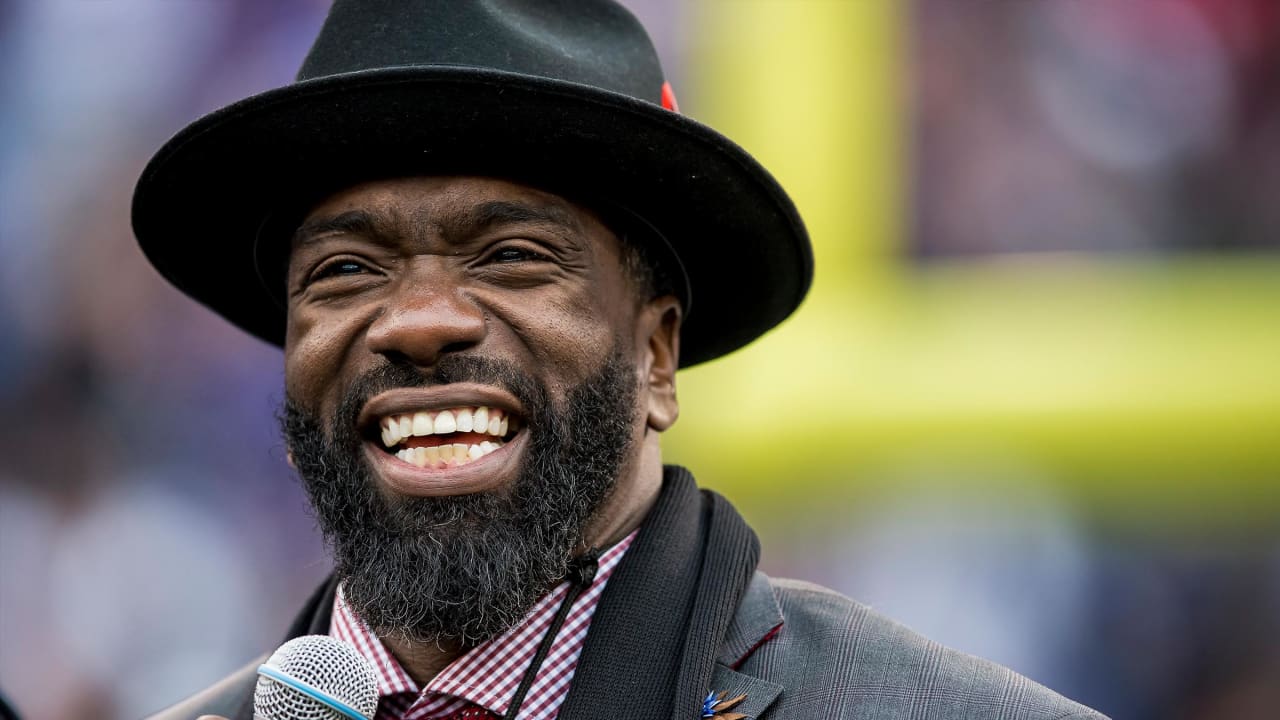
NFL star Ed Reed to be next head football coach at Bethune Cookman University

Former University of Miami & NFL star Ed Reed will be next head football coach at Bethune-Cookman University.

The university athletics department made the announcement via Twitter.

Reed was a two-time All-American at Miami, helping the Hurricanes win the National Championship in 2001. He was selected in the first round of the 2002 draft by the Ravens, spending 11 seasons with the team and winning the 2013 Super Bowl. He split the final year of his playing career with the Houston Texans and New York Jets.

In 2016, Reed worked as an assistant defensive backs coach for the Buffalo Bills. In 2020, he was hired by the University of Miami, his alma mater, to serve as their football team's chief of staff, an advisory role to head coach Manny Diaz.