Thursday, March 31, 2022

Judge strikes down parts of Florida election law that made it more difficult for African Americans to vote

A federal judge struck down portions of a Florida election law passed last year, saying in a ruling Thursday that the Republican-led government was using subtle tactics to suppress Black voters.

The law tightened rules on mailed ballots, drop boxes and other popular election methods — changes that made it more difficult for Black voters who, overall, have more socioeconomic disadvantages than white voters, U.S. District Judge Mark Walker wrote in his ruling.

“For the past 20 years, the majority in the Florida Legislature has attacked the voting rights of its Black constituents,” Walker wrote. Given that history, he said, some future election law changes should be subject to court approval.

Walker, who was appointed by former President Barack Obama, also overturned a provision in the law putting new restrictions on groups that register voters, including requiring that people working to register voters submit their names and permanent addresses to the state.

Walker ordered that for the next 10 years, any attempt by the Legislature to write new laws on the issues he overturned will need court approval.

“Floridians have been forced to live under a law that violates their rights on multiple fronts for over a year," he wrote. “Without preclearance, Florida could continue to enact such laws, replacing them every legislative session if courts view them with skepticism. Such a scheme makes a mockery of the rule of law.”

Rep. Bobby Rush statement on the signing of the Emmet Till Antilynching Act into law

President Joe Biden has signed the Emmett Till Antilynching Act (H.R. 55), legislation sponsored and negotiated by U.S. Representative Bobby L. Rush (D-Ill.), into law. H.R. 55 passed the U.S. House of Representatives on February 28th by a vote of 422–3 and passed the U.S. Senate unanimously on March 7th.

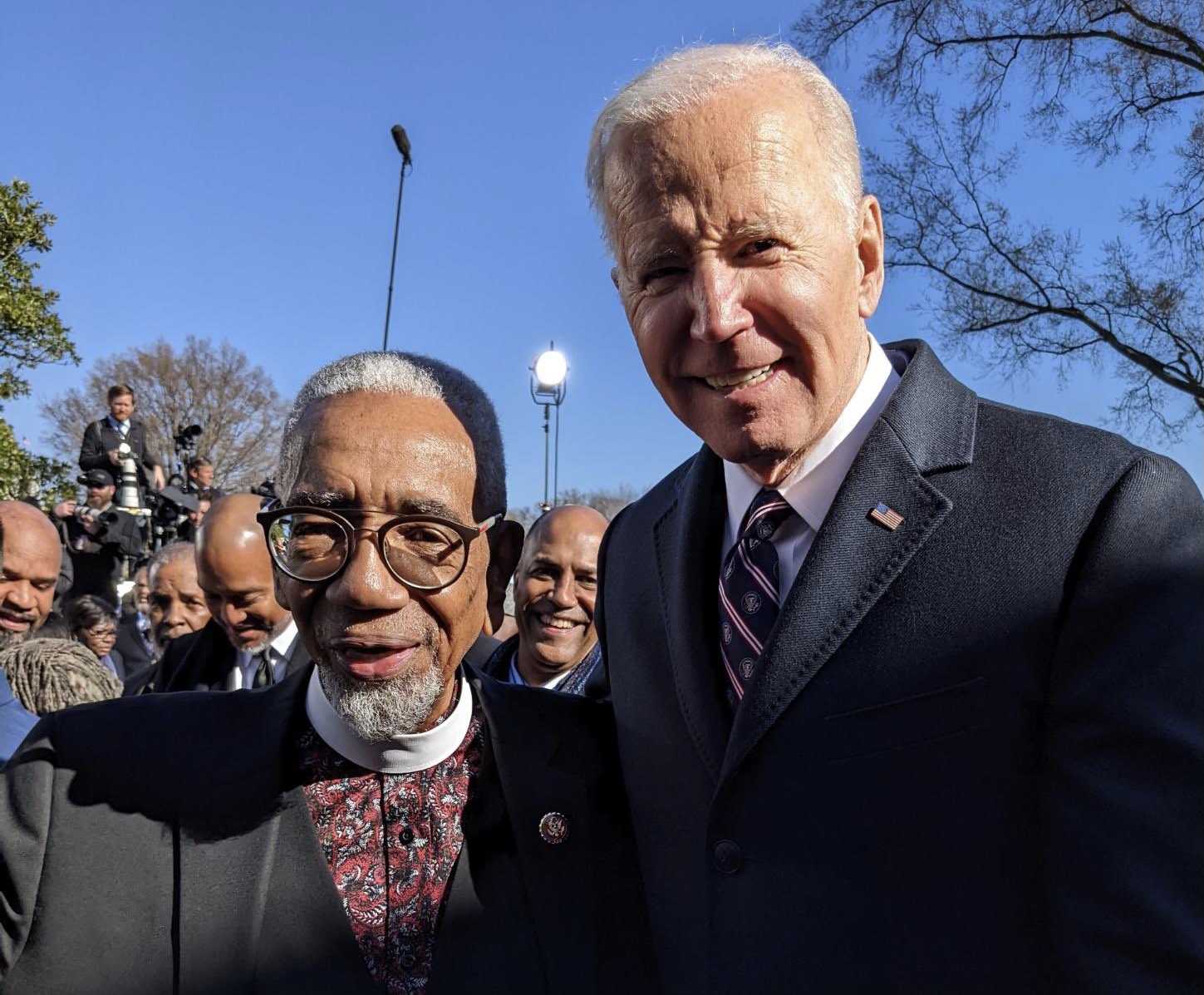
Rush, who attended the White House signing ceremony for the bill in the Rose Garden today, released the following statement:

“This is a historic day and a day of enormous consequence for our nation. After more than 100 years and 200 attempts, lynching is finally a federal crime in America. When I think of what this means — that we can finally provide justice for the victims of this heinous act; that we will be able to reckon with our nation’s legacy of lynching; and that we will, once and for all, send a strong message that we will not stand for these abhorrent crimes — I am elated.

“The enactment of my bill means that the full weight and power of the United States government can be brought to bear against those who commit this vicious crime. We will no longer face the question of if a perpetrator of lynching will be brought to justice — with the President’s signature today, we have eliminated that possibility moving forward.

“I was eight years old when my mother put the photograph of Emmett Till’s brutalized body that ran in Jet magazine on our living room coffee table, pointed to it, and said, ‘this is why I brought my boys out of Albany, Georgia.’ That photograph shaped my consciousness as a Black man in America and changed the course of my life.

“I am thinking of Emmett Till, who would have been 80 years old today. His brutal lynching ignited the civil rights movement and a generation of civil rights activists. It had a ripple effect that we still feel today; it began a worldwide movement to reckon with freedom, justice, and equality all around the world.

“Emmett Till meant so much to the City of Chicago. The signing of this bill is a victory for the City of Chicago, a victory for America, and a victory for Black America, in particular. I am so proud that we have come together — in a bipartisan fashion — to enact a law that will ensure lynchings are always punished as the barbaric crimes they are.”

Sen. Cory Booker Statement on Signing of Emmett Till Antilynching Act into Law

U.S. Senator Cory Booker (D-NJ) issued the following statement on President Biden signing the Emmett Till Antilynching Act into law:

“As our nation strives to become a more perfect union, we must reckon with America’s past, including the history of racialized violence that has permeated our nation. Antilynching legislation will not heal the pain experienced by the more than 4,000 African American men, women, and children who were lynched during the 19th and 20th centuries. It will not reverse the fear and suffering that Black communities endured during those years as this shameful instrument of terror was wielded by white supremacists to intimidate and oppress. But signing the Emmett Till Antilynching Act into law is a necessary step that signals our nation is willing to confront the darkness of its past to move towards a brighter future.

“This day is more than just the result of the bipartisan efforts undertaken in the past weeks, months, and years; instead, it is the culmination of an endeavor that has spanned generations. The first of 200 attempts to make lynching a federal crime occurred in 1900. In 2018, I was proud to continue the fight alongside then-Senator Kamala Harris and have worked with colleagues on both sides of the aisle to make sure this bill passes Congress. Now, with the President’s signature, we are finally able to say that, after a century’s worth of efforts, we have met the moment and done the right thing.”

Wednesday, March 30, 2022

Lawsuit to block Obama Presidential Center tossed out

A federal judge has dismissed the latest attempt to block construction of the Obama Presidential Center in Jackson Park.

Protect Our Parks filed a second lawsuit last year attempting to stop the presidential center from being built in historic Jackson Park, arguing the years-long federal review of the project's environmental impact on the site was flawed.

They also argued that state and federal regulators should have considered sites other than Jackson Park, which they argued would have been "much less harmful to protected resources."

But U.S. District Judge John Robert Blakey on Tuesday ruled the city "did not abdicate control or ownership" of the Obama Center site, and that presidential centers provide clear public benefits, including "furthering human knowledge and understanding, educating and inspiring the public, and expanding recreational and cultural resources and opportunities."

Construction of the Obama Presidential Center began last summer, and is expected to be completed in 2025.

The Obama Foundation has estimated the center will cost approximately $500 million. Once it is built, the city would own the campus, but the center would pay to maintain it. The Obama Presidential Center will be privately funded, and the foundation will pay the city $10 to lease the land for 99 years.

The center will include a 235-foot stone tower housing the site's museum; a Chicago Public Library branch; a multipurpose space on top of the museum, a program, activity, and athletic center for community programs and events; a Great Lawn for social gatherings, barbecues, a nature center; and new walking and biking trails; a children's play area; and a fruit and vegetable garden and teaching kitchen.

The center will not include a formal presidential library operated by the National Archives and Records Administration. Rather, Obama's collection of presidential documents and artifacts will be stored in existing NARA facilities, and non-classified documents will be available online.

[SOURCE: CBS NEWS]

Republican Senator Susan Collins to support Ketanji Brown Jackson’s nomination to the Supreme Court

Sen. Susan Collins (Maine) released a statement on Wednesday stating that she would support Ketanji Brown Jackson's nomination to the Supreme Court. This makes her the first Republican to back her confirmation.

Here is the full statement from Senator Collins:

After reviewing Judge Ketanji Brown Jackson’s extensive record, watching much of her hearing testimony, and meeting with her twice in person, I have concluded that she possesses the experience, qualifications, and integrity to serve as an Associate Justice on the Supreme Court. I will, therefore, vote to confirm her to this position.

Judge Jackson has sterling academic and professional credentials. She was a Supreme Court clerk, a public defender, a respected attorney, and a member of the Sentencing Commission. She has served as a federal District Court judge for more than eight years and currently sits on the D.C. Circuit Court of Appeals. Her stellar qualifications were confirmed by the American Bar Association’s Standing Committee on the Federal Judiciary, which awarded her its highest rating of “unanimously well qualified.”

In my meetings with Judge Jackson, we discussed in depth several issues that were raised in her hearing. Sometimes I agreed with her; sometimes I did not. And just as I have disagreed with some of her decisions to date, I have no doubt that, if Judge Jackson is confirmed, I will not agree with every vote that she casts as a Justice.

That alone, however, is not disqualifying. Indeed, that statement applies to all six Justices, nominated by both Republican and Democratic Presidents, whom I have voted to confirm.

No matter where you fall on the ideological spectrum, anyone who has watched several of the last Supreme Court confirmation hearings would reach the conclusion that the process is broken. Part of the reason is that, in recent years, the process has increasingly moved away from what I believe to be appropriate for evaluating a Supreme Court nominee.

In my view, the role the Constitution clearly assigns to the Senate is to examine the experience, qualifications, and integrity of the nominee. It is not to assess whether a nominee reflects the ideology of an individual Senator or would rule exactly as an individual Senator would want.

It used to be common for Senators to give the President, regardless of political party, considerable deference in the choice of a nominee. One need look no further than the 98-0 vote Justice Scalia received in 1986 and the 96-3 vote Justice Ginsburg received in 1993.

This approach served the Senate, the Court, and the Country well. It instilled confidence in the independence and the integrity of the judiciary and helped keep the Court above the political fray. And this is the approach that I plan to continue to use for Supreme Court nominations because it runs counter to the disturbing trend of politicizing the judicial nomination process.